Key Takeaways
- Liability, collision and comprehensive are different coverages; comprehensive does not mean every loss is covered.
- Compare limits, deductibles and excluded uses before comparing price.
- Read a telematics program’s data and pricing terms before assuming it will lower your premium.
Start an auto-insurance comparison with the same drivers, vehicles, uses and coverage amounts. A cheaper quote may leave a different financial risk with your household.
Separate the jobs each coverage does
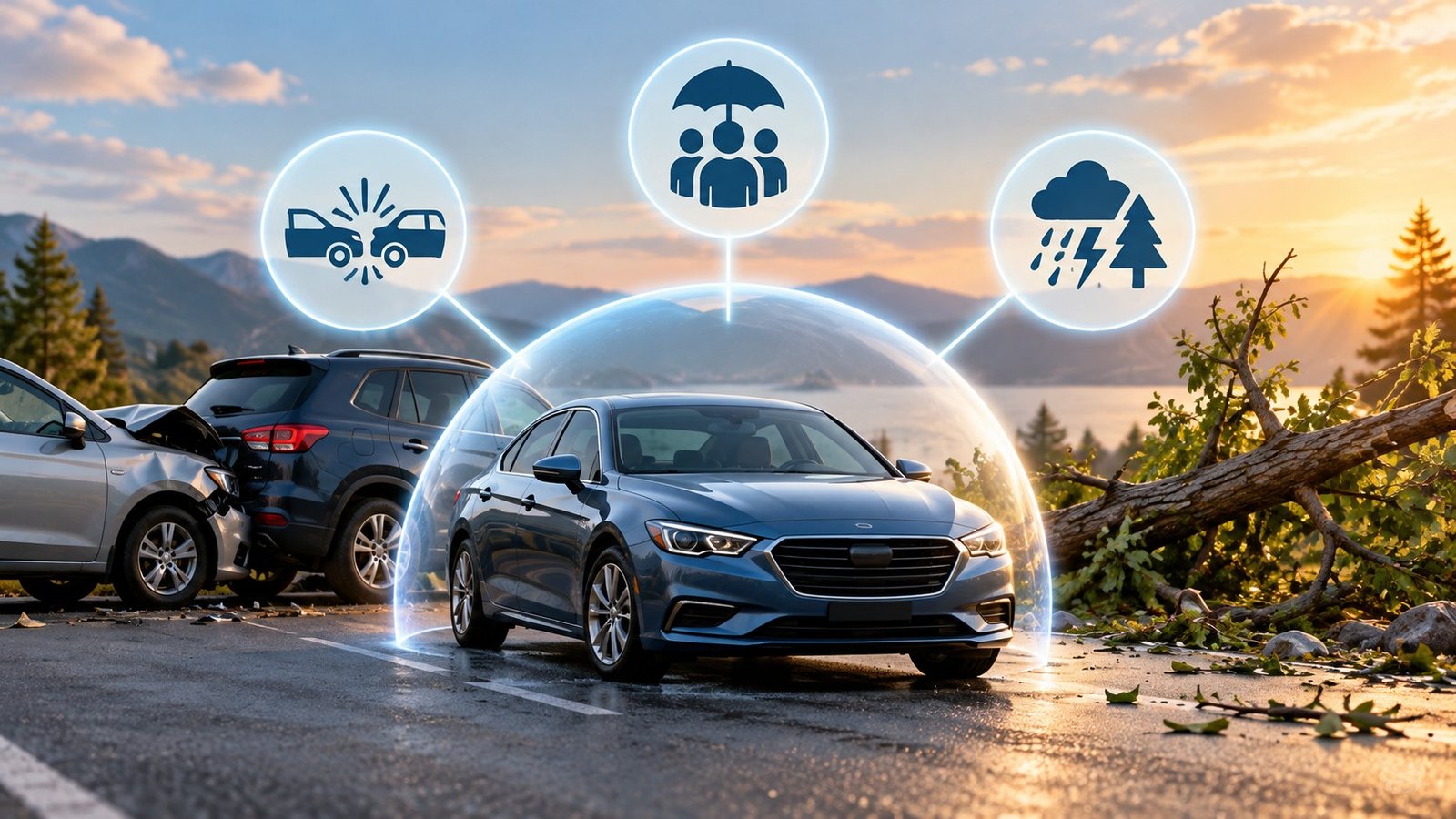
The NAIC explains that liability addresses certain claims for injury or damage to others. Collision covers damage to your vehicle from a collision with an object or another vehicle. Comprehensive generally addresses other covered causes, such as theft, fire or severe weather. Limits and exclusions still apply.
Check the details a short quote omits
- Which drivers and vehicle uses are covered or excluded?
- What are the liability and uninsured/underinsured motorist limits?
- Which coverages carry separate deductibles?
- Are rental reimbursement or roadside services included or optional?
- Does a lender or lease require specific coverage?
Evaluate monitoring separately
Telematics programs monitor driving information for insurance purposes. Ask what is collected, how errors can be corrected, who receives the information and how participation can affect future pricing. Compare the program’s written terms with an otherwise equivalent policy; an introductory discount is not a promise of lasting savings.
Keep a usable renewal record
Save the quote assumptions and policy schedule. Record what changed at renewal and how much deductible cash you would need. Ask the insurer about an unclear term rather than relying on labels such as “full coverage.” Check your state’s requirements and the actual contract.
Related reading
Official sources
Coverage and state rules vary; the actual policy controls.