Key Takeaways
- Report missing payment cards to their issuers promptly; a credit freeze does not stop charges on existing cards.
- Keep a record of reports, disputed transactions and replacement-document requests.
- Use official recovery channels and review credit reports for unfamiliar accounts.
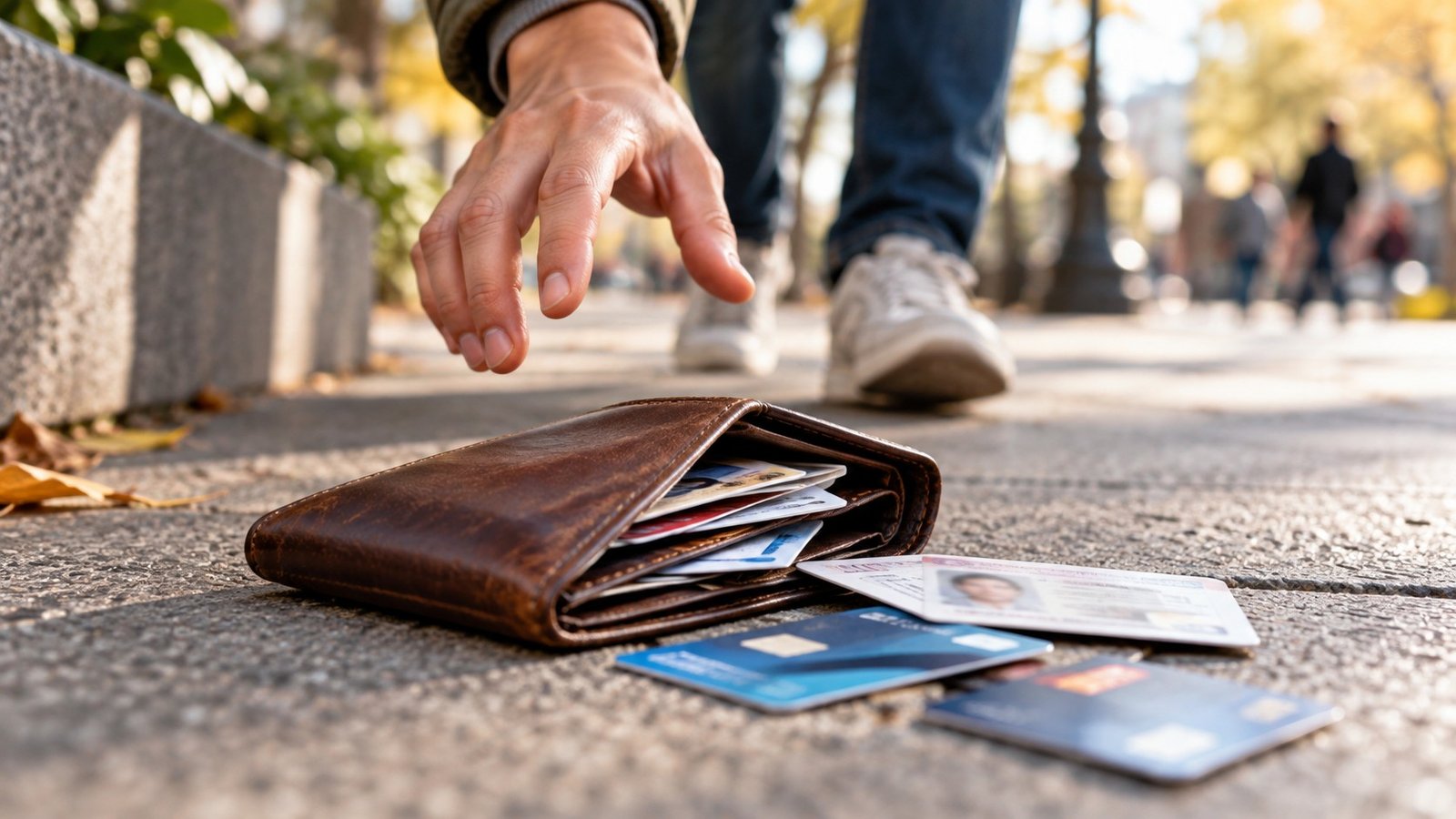
If your wallet is missing, first consider your immediate safety and where it was last used. Then make a list of the payment cards, identification and other sensitive items it contained. Do not postpone reporting a missing debit or credit card while waiting to see whether the wallet turns up.
1. Contact card issuers immediately
Use the issuer’s official app, a recent statement or a verified website to report each missing credit, ATM or debit card. Ask how to cancel or secure the card, get a replacement and handle transactions you do not recognize. A temporary card lock may be useful, but ask whether it constitutes the required loss report and what transactions it blocks.
The FTC’s lost-card guidance explains that protection depends on the card type and when the loss is reported. For a lost or stolen debit or ATM card, reporting within two business days after learning of the loss is important to limiting potential liability. Do not use that period as a reason to wait; contact the institution immediately.
Record when you noticed the loss, when and how you reported it, the person or reference number and the instructions received. The FTC recommends written follow-up. Use the institution’s proper dispute or error address and keep copies securely.
2. Review transactions and report errors
Check recent activity in the affected accounts and continue checking statements after replacements arrive. Tell the institution promptly about an unauthorized transaction, even if the physical card has already been canceled. Card-replacement and transaction-dispute processes may be separate.
Credit-card and debit-card liability rules differ, and the rules for a stolen card are not identical to those for misuse of an account number when the card itself remains with you. Follow the official instructions for your situation and preserve the relevant statement and notices. A refund amount or date should not be assumed before the institution reviews the claim.
3. Replace identification through the issuing agency
For a driver’s license or state ID, use the official motor-vehicle or licensing agency in your state. For another government document, follow that agency’s lost-document instructions. Ask what identification is needed, whether the document must be reported stolen and how to confirm the replacement address safely.
If a work badge, insurance card or access card was lost, notify the responsible organization. Avoid sending copies of every identity document to an unverified replacement service. Replace the items that were actually lost rather than sharing more personal information than the agency requires.
4. Address new-account identity theft separately
A credit freeze helps restrict access to a credit report for new-credit decisions. It does not cancel existing cards, stop every form of identity theft or replace reporting missing cards. The FTC explains that placing or lifting a freeze is free and requires contacting all three nationwide credit bureaus.
Review credit reports for unfamiliar accounts or inquiries. If you find evidence of identity theft, the FTC directs consumers to IdentityTheft.gov for a report and recovery plan. A fraud alert is another option with different effects from a freeze. Keep any recovery documents and follow the steps relevant to the information that was exposed.
5. Check payments and account security
Ask whether recurring payments or digital-wallet cards will continue, be updated automatically or need replacement details. Keep track of upcoming bills so a canceled card does not quietly cause a missed payment. Confirm any replacement card or temporary payment method directly with the issuer.
If a phone, password record or account credentials were also exposed, secure the affected accounts through official channels and enable available multi-factor authentication. Treat an unexpected caller offering paid card-loss protection with suspicion; the FTC warns that such calls can be scams.
Keep a short recovery list
Track the item, report date, reference number, replacement status and any unresolved charge. Carry only the cards and documents you need in future, and keep issuer contact details separately. Never keep a card’s PIN in the wallet with the card.
Official sources
Related reading
- Use free credit freezes to reduce identity-theft risk
- Secure online banking accounts
- Review credit reports and track errors