Key Takeaways
- A motorhome and a towed travel trailer can need different coverage arrangements.
- Liability from towing is different from damage to the trailer itself.
- Full-time living and belongings inside the RV need explicit review.
What kind of RV are you insuring?
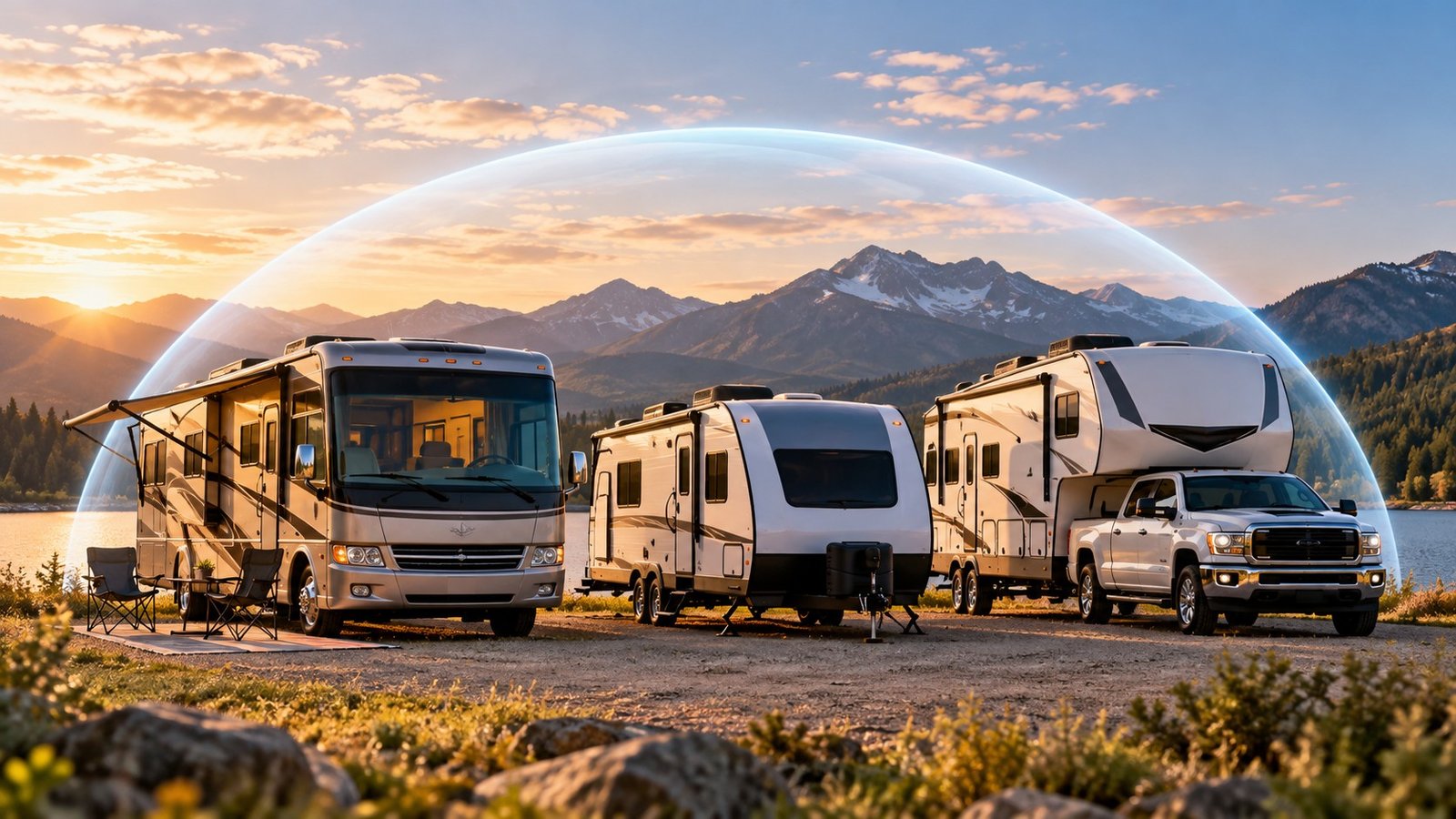
Start by identifying whether you have a drivable motorhome, a travel trailer or a fifth wheel. Give the insurer the vehicle details and describe how often you travel, where you store it and whether it is your residence. Do not assume an ordinary car or home policy covers every part of the arrangement.
The Texas Department of Insurance explains that an auto policy might cover accidents caused while towing a trailer, while damage to the trailer itself may need a separate RV policy or endorsement. Its motorhome liability requirement is a Texas rule; confirm requirements in your own state.
Separate the losses you want to insure
Liability pays for covered harm to other people or their property. Collision and comprehensive address different kinds of damage to the insured motorhome. Ask how the contract treats fire, theft, flood, storms and a collision, rather than relying on the phrase full coverage.
Personal belongings inside may have separate limits. Texas guidance notes that home-policy coverage can be very limited and recommends checking RV coverage. Ask about electronics, tools and other valuable items individually, including any inventory or receipt requirements.
What changes if you live in the RV?
Tell the insurer if you live in the RV full time. Texas guidance describes full-timers coverage as including personal property and liability while not driving. Eligibility, locations and covered losses depend on the product. Ask what happens at a campsite or on a rented lot, not only on the highway.
Compare these details in writing
- The RV’s loss-settlement basis: depreciated value, an agreed amount or a replacement provision with conditions.
- Deductibles for collision, comprehensive and any special causes of loss.
- Emergency lodging, trip interruption, roadside towing and recovery limits, if offered.
- Coverage for attached equipment, awnings and personal property.
- Geographic, rental-use, storage and full-time occupancy restrictions.
A policy advertised with replacement coverage may have age limits, time limits and maximum payments. Ask for a sample settlement calculation. Plan cash reserves for deductibles and expenses that a policy does not reimburse before committing your travel budget.
Sources and coverage limits
Texas Department of Insurance RV guidance (updated July 21, 2025; Texas examples). Coverage depends on your contract and state rules; this guide does not determine whether a particular claim is covered.
Continue reading
Check your insurance limits and budget an emergency reserve.