
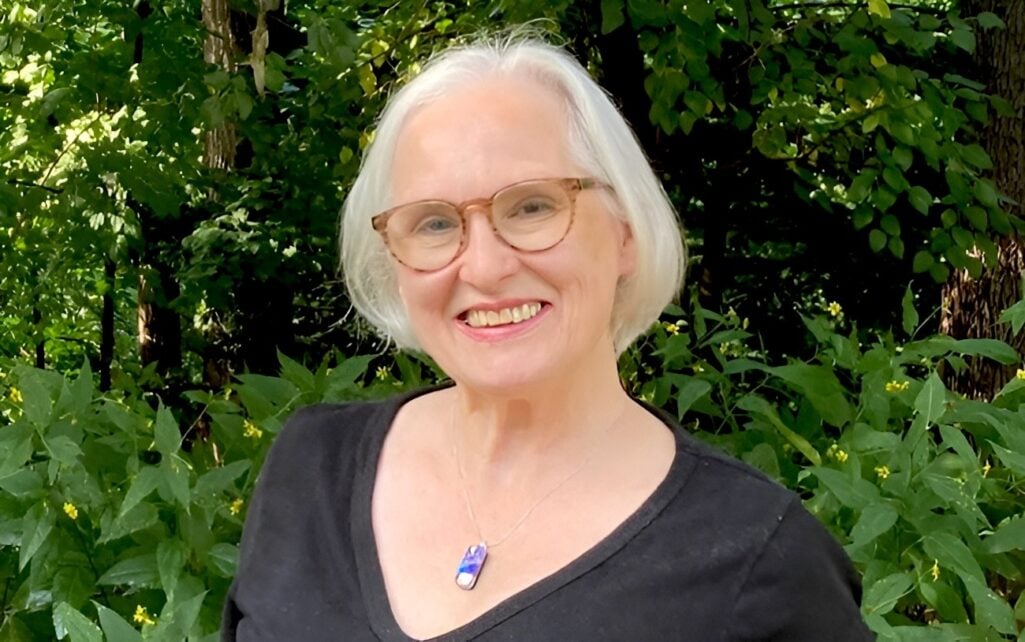
How One Woman Figured Out Retirement on Her Own

Andrea Solarz started saving before she had a reason to. In grade school, she’d bring a dime to class and deposit it into a Bank of America passbook savings account. At home, her parents gave the kids a fixed amount monthly that they had to manage themselves, with no task attached. The lesson was practical: here’s your budget, now figure it out.
She took it to heart. Andrea is single, has no children, and has managed her finances herself throughout her career. “You have to pay attention to it all yourself,” she told Steve Chen on the Boldin Your Money podcast. “You’re the only one managing it.”
By her twenties, Andrea was reading Kiplinger, attending American Association of Individual Investors meetings, and building a brokerage account she almost never touched. She’d been self-employed for much of her career, and her income was sporadic enough that she couldn’t count on consistent savings targets.
What she didn’t know, until she sat down with the Boldin Planner two years ago, was that all of it had been enough. “It was just this huge revelation to me that I actually was in good financial shape,” Andrea reflected. It gave her the clarity to take Social Security, pay off her mortgage, and commit to retirement.
Learning to Budget Young Shapes How You Handle Money for Life
Andrea’s parents understood that the most durable financial habits come from making practical choices with your money. Their one rule was that the money they gave their kids had to cover what the kids wanted it to cover.
“It wasn’t an allowance like, oh, if you clean the bathroom, then you get an allowance,” she recalled. “It was more like a stipend… you get a standard amount of money and you have to use it to figure out how to cover the expenses.”
That forced Andrea to think about trade-offs and priorities before she was in high school.
“We had to manage that,” she explained. “I learned to handle money and think about it as something I could use to save up for something important.”
The setup worked because the decisions were hers and the stakes were clear. She learned early that money was a resource with limits, and the way you managed it determined what was possible within those limits.
Her Father’s Panic-Selling Taught Her to Hold Through Volatility
For her 13th birthday, Andrea’s father gave her three shares of Holiday Inn stock. But she soon noticed that he wasn’t a confident investor.
“He was kind of a buy high, sell low kind of guy,” she said. “He would panic and say, I can’t do this anymore, and get out of things.”
Watching that pattern up close had the opposite effect on Andrea. She never sold based on fear. When markets dropped or a position got uncomfortable, she held. “I always held on,” she said.
Professional advisors spend years trying to help clients build that discipline. Andrea developed it through observation, and it became the foundation of an approach she stuck with for decades.
Why Concentrated Positions Require a Different Kind of Discipline
Not every long hold pays off, and Andrea learned that firsthand.
A friend gave her access to a company IPO. She got in, the stock fell to 97 cents a share, and she bought more at that price. When COVID hit, the position jumped to more than $100,000, which was a 70-plus multiple on what she’d put in.
“I thought, this is great,” she remembered. “It’s going to go up even higher.”
Andrea kept holding, but then the stock fell back. It’s worth roughly $20,000 now.
“You have to think: take advantage of where it is,” she said. “Don’t be greedy and think it’s going to get even better.”
It’s a useful check on the idea that patience is the right call in every situation. With concentrated positions, the discipline that protects you through broad market downturns can work against you when a single holding spikes fast. Taking profits off the table is different from selling out of fear.
She Timed Roth Conversions Right, but Wishes She’d Started Sooner
Andrea came to Roth conversions through her own reading, figuring out that the best time to do them is when taxable income is lower and before Social Security and required minimum distributions begin. “That is the golden point for doing those,” she said.
She wishes she’d started thinking about it sooner and converted more of her money at a lower rate. But she thinks the topic is somewhat oversold.
“I think there is a lot of misinformation and hype out there about Roth conversions,” she remarked. “Where people end up making conversions and overpaying their taxes.” The math only works when your current rate is lower than your expected future rate.
She was also late to the capital gains zero-rate strategy. One year she paid no tax on investment gains by staying within the right income threshold, and then realized she could have been doing that for years. “Oh man, if I’d realized that earlier, I could have reset the basis for practically every investment that I have,” she noted. “That would’ve been a better strategy.”
The lesson she took away is that tax planning in retirement rewards people who map the whole runway.
How Seeing Your Full Retirement Picture Changes What Seems Possible
Andrea had used a spreadsheet for years. It worked up to a point, then hit a wall. “I remember sitting there one day and going, there has to be an easier way,” she said.
She came across Boldin, signed up for a free account… and then didn’t use it. Eventually, she came back when a promotion caught her eye. When she finally entered her accounts and income sources, the full retirement picture surprised her.
“It was just this huge revelation that I actually was in good financial shape,” she said.
She’d been self-employed for much of her career, with income that was irregular for long stretches. When she went out on her own, she set up a SEP-IRA (Simplified Employee Pension Individual Retirement Arrangement) but didn’t put much into it. Her employer-plan savings were from jobs she’d held decades earlier. Her brokerage account had a mix of wins and losses.
In fragmented pieces, it didn’t look like much. But when viewed as a projected income stream over 30 years, it was enough for her.
“When I compare myself to a lot of people in these groups online, I’m clearly in the bottom quarter in terms of what I have,” she noted. “But it’s plenty. It would be difficult for me, with my spending patterns, to ever run out of money.”
The unlock for Andrea was the complete picture of her finances, enabling her to see all of it at once. “I can now spend it in a planful, thoughtful way,” she said.
Shifting From Saving to Spending Is a Habit Change
Getting permission to spend is harder than it sounds when saving has been the habit for 50 years.
After the Boldin Planner showed Andrea she had what she needed, she still had to work through the transition. She took Social Security benefits. She paid off her mortgage. She started redirecting investment dividends to her checking account instead of reinvesting them. And she instituted a new rule: cash coming in each month gets spent.
“It’s breaking a habit,” she explained. “Habits are hard to break. You have to work at breaking a habit.”
Andrea’s framework is concrete. She annuitized a portion of her TIAA retirement account, which along with Social Security gives her a guaranteed monthly floor she doesn’t have to recalculate. The rest stays invested. After she paid off her mortgage, she decided to take what had been going to principal and interest and, as she put it, “get rid of that money and have it do good for whatever.”
She put it toward things that mattered to her, including friends who’d hit hard times and needed a bridge. “A little money can make such a big difference in somebody’s life when they don’t have it,” she said. “It’s nice to be able to just give it freely.”
The result is a retirement that runs on income Andrea can count on, with room to comfortably travel, give, and spend without keeping a running tally.
Planning for Retirement When You’re the Only One Managing It
Most of the retirement planning content Andrea sees features couples, but she built her plan as a single woman. There was no second income to help support her during the lean years, and no partner to share the decisions or cover the gap if something went sideways.
That comes with its own discipline. There’s no one to talk you into panic-selling, and no competing priorities pulling the budget sideways. Andrea’s ability to hold through volatility and develop a plan that fit her spending patterns came from having owned the whole thing herself from the start.
Her message to other single people who are figuring out where they stand: “You can still do it.”
Most people who are building a financial life on their own have never seen it whole. If you’re not sure your numbers are as strong as you think, the Boldin Planner translates what you’ve saved into what you can spend. Enter everything and see what the full picture looks like.
FAQs About Retiring Single and Self-Employed
Self-employed people with irregular income can retire comfortably, even when their savings are spread across a SEP-IRA, an old employer plan, and a brokerage account built over decades. The income usually isn’t missing — it’s fragmented. Most self-employed people don’t need more money saved; they need a way to see all of it as a projected income stream rather than a collection of disconnected accounts.
Retirement planning as a single person comes with real differences: there’s no second income to buffer a difficult year, no partner to share decisions with, and no fallback if something goes sideways. But single people who own their finances fully often develop stronger habits — they hold through volatility because there’s no one to talk them into selling, and they build plans that fit their actual spending rather than a household average. The tools and strategies available are the same; the responsibility just rests entirely with one person.
Shifting from saving to spending in retirement takes more deliberate effort than most people expect. After decades of treating saving as the default, spending can feel uncomfortable even when the numbers clearly support it. Building a reliable income floor — through Social Security, an annuity, or both — helps because it removes the need to recalculate every month. From there, practical changes like redirecting investment dividends to a checking account instead of reinvesting them can make it feel more natural to spend what’s coming in.
The best window for Roth conversions is the gap between retirement and when Social Security and required minimum distributions (RMDs) begin. During those years, taxable income is often at its lowest, and converting traditional IRA funds to a Roth at a lower rate can reduce tax burden for decades. The math only works in your favor when your current rate is lower than your expected future rate, so it’s worth running the numbers carefully before assuming a conversion is always the right move.
