Americans have more money invested for retirement in passive S&P 500 Index funds than any other investment. The Vanguard and BlackRock S&P 500 ETFs alone manage nearly $2 trillion in assets, with the Vanguard ETF (VOO) recently passing the $1 trillion mark.
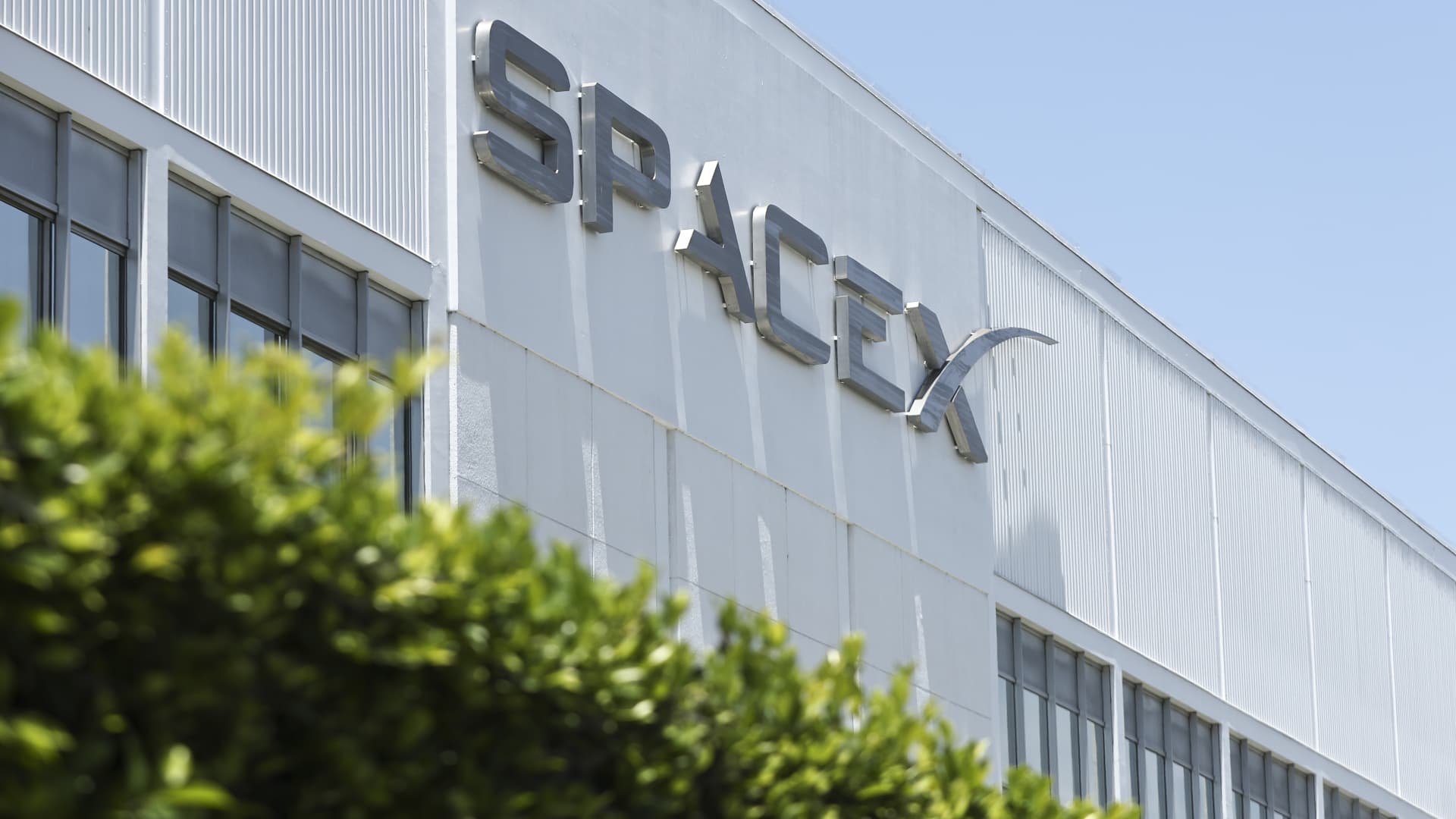
But unlike other mutual funds and ETFs, they won’t be managing SpaceX shares any time soon for retail investors who want to get a piece of the action in the stock after Friday’s mega-cap IPO, the biggest in the history of the market.
The index committee that oversees the rules for new stock inclusion in the S&P 500 Index said no to the biggest IPO in history, at least for the first year of its public market trading history.
Faced with a new era of mega-cap stocks — with OpenAI and Anthropic expected to follow the SpaceX IPO on Friday with huge offerings pushing them into the territory of the largest publicly traded companies in the U.S. on day one — the index manager was forced to make a call on whether to move up its standard 12-month waiting period for new stocks.
Unlike the S&P, index committees for the Nasdaq and Russell market benchmarks said they would update their rules. In the simplest terms, here’s what that means for core U.S. market index fund investors.
“If you want SpaceX, you’re not buying the S&P 500. You’re going to buy the NASDAQ 100 or the Russell 1000,” said Strategas Securities chief ETF strategist Todd Sohn on this week’s “ETF Edge.”
SpaceX shares began trading on the Nasdaq on Friday, initially rising to a value above $2 trillion. But if you hold an ETF like VOO, or BlackRock’s IVV, or the State Street SPDR S&P 500 Trust (SPY), you will be waiting for your SpaceX exposure until at least mid-2027.
The decision to leave in place the long window before SpaceX ever becomes part of the S&P 500 is not one that sat well with Peter Haynes, TD Securities’ head of index and market structure research, supported. “Personally, I didn’t agree with the decision,” he told “ETF Edge.”
Haynes said in the podcast portion of “ETF Edge” that it is “a controversial discussion,” but he added, “In my mind, it’s a natural extension of what exists already in global benchmarks.”
He pointed to the example of Saudi Aramco, which when it went public in 2019 was the largest IPO in history. At that time, both FTSE and MSCI created fast-track models for global benchmarks to add the stock to indexes after 5 to 10 days. “U.S. benchmarks were geared to follow the lead of global benchmarks,” he said. “They have a ‘Made in the USA’ stock that is sizable and belongs in benchmarks,” Haynes said.
“What this is doing is setting a precedent that [the] S&P will not add OpenAI and Anthropic when those IPOs happen,” Sohn said.
Sohn said the dueling decisions from the index providers could create an “index war” — specifically, performance dispersions between the S&P 500, Nasdaq, and other indexes.
Haynes added it could be longer than a year, “much longer,’ he said, before S&P 500 investors get exposure to SpaceX…