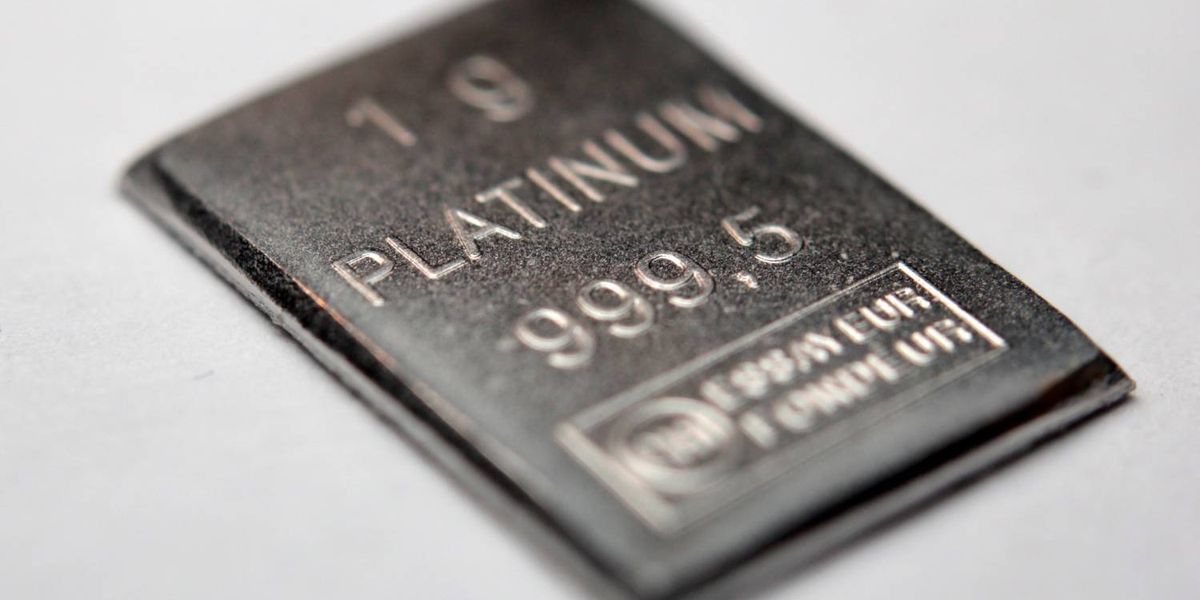
Platinum Price Forecast: Top Trends for Platinum in 2026

The platinum price surged more than 90 percent from Q2 on in 2025, passing US$1,900 per ounce in December.
After silver, platinum was easily the second best-performing metal in terms of price for the year.
Some of its gains were due to strong industrial demand from the automotive sector and emerging clean energy technologies. And as a precious metal, interest rate cuts by the US Federal Reserve have boosted investment demand.
However, the biggest factor moving platinum’s price is the projected supply shortfall of more than 692,000 ounces for the year. Will these trends carry on in to 2026? Read on to learn more about what analysts believe is in the cards.
Automotive sector still leads for platinum demand
The automotive industry is easily the largest demand sector for platinum.
Both platinum and palladium can be used in catalytic converters, which help eliminate toxic emissions from vehicle tailpipe gases. As their prices fluctuate, platinum and palladium tend to be swapped.
“Unlike gold, both platinum and palladium are more volatile than other precious metals; however, they remain in high demand, particularly from car manufacturers, where they help reduce emissions in catalytic converters (particularly platinum),” John Murillo, chief business officer at B2BROKER, a global fintech solutions provider for financial institutions, told the Investing News Network (INN) in an email. “Around 50 percent of global platinum demand comes from the auto sector, making the metal more tied to industrial trends than traditional investing.”
Even so, in its latest platinum quarterly, released on November 19 and prepared by Metals Focus, the World Platinum Investment Council (WPIC) is reporting that demand for platinum from the auto sector will drop 3 percent in 2025 to 3.02 million ounces, followed by another 3 percent decline to 2.915 million ounces of the metal in 2026.
This is due in large part to the transition from internal combustion engines to electric vehicles (EVs).
That said, the clean energy transition is happening so slowly that its impact on the platinum market is fairly subdued.
“If you look at, for example, automotive demand for platinum plus palladium, and projected out over a longer time period, we’ve only got about a negative 1.7 percent CAGR over the next five years, so pretty modest pace of decline in terms of industrial demand,” Edward Sterck, WPIC’s head of research, told INN in a December interview.
Hydrogen tech a long-term demand growth driver
Platinum is also a necessary material in the production of hydrogen electrolysis and fuel-cell technologies.
Linh Tran, senior market analyst at XS.com, a global multi-asset broker, told INN that although the hydrogen segment currently accounts for a small portion of overall platinum demand, it’s considered a long-term growth driver.
“Hybrid vehicles and…